Why Press Releases Get Rejected and How to Fix Them

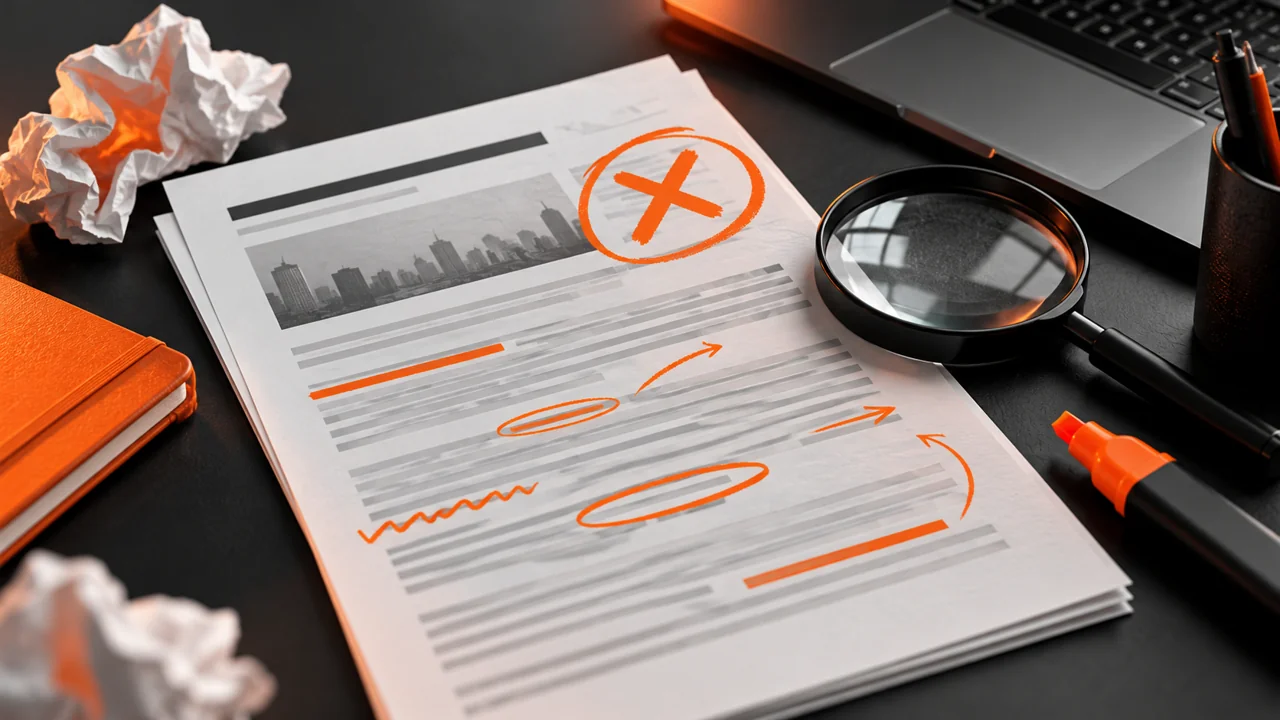
A press release can be grammatically correct and still fail editorial review. The announcement may read like an advertisement, leave important claims unsupported, or fall outside a distribution platform’s accepted categories. Polishing individual sentences will not solve those problems until the underlying issue is clear.
Understanding why press releases get rejected helps businesses avoid repeated submissions, launch delays, and unnecessary rewriting. Editors need a genuine announcement, a clearly identified source, accurate information, and content that follows their publication rules.
However, rejection is different from silence. A distribution service may return a submission for changes, while a journalist may simply decide that an approved release does not suit their audience. Neither situation automatically means your business has no worthwhile story.
This guide explains the main editorial rejection reasons, shows practical corrections, and provides a checklist for preparing a stronger submission. The aim is to make your announcement credible, useful, and ready for the appropriate publishing channel.
Why Press Releases Get Rejected During Editorial Review
Distribution services review submissions against their own content guidelines. These can cover newsworthiness, sourcing, formatting, links, permissions, and restricted subjects. Approval standards differ between providers, so a release accepted by one service may need changes elsewhere.
First, establish what happened:
- Returned for revision: the editor has identified potentially fixable problems.
- Declined under policy: the subject or submission falls outside platform rules.
- No journalist response: the story has not attracted a reply or coverage.
- Not indexed: a search engine has not included the published page.
These outcomes require different responses. Ask for the specific editorial reason before rewriting. Search visibility and independent media coverage are separate from distribution approval.
1. The Announcement Has No Clear News Angle
A weak news angle is one reason why press releases get rejected. A general description of your services tells readers what your company does, but it does not explain what has changed.
Identify a concrete development: a product release, new location, published research, executive appointment, or confirmed partnership. Explain who is affected and why the timing matters.
Weak example: “BrightDesk Provides Excellent Software for Businesses.”
Improved example: “BrightDesk Launches Appointment Scheduling Software for Independent Clinics.”
Both examples are fictional. The revised headline identifies the company, the action, and the intended audience.
If there is no actual development, publish an educational blog post instead. Do not manufacture an announcement simply to create another distribution opportunity.
2. The Copy Reads Like an Advertisement
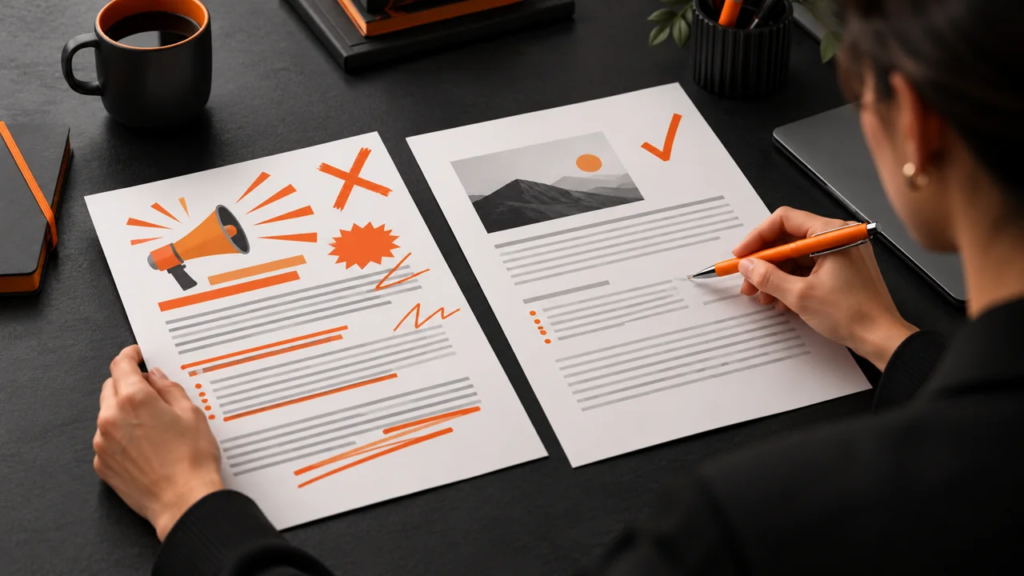
Sales language also explains why press releases get rejected. Repeated calls to buy, exaggerated adjectives, and unsupported promises make an announcement resemble promotional copy.
Replace persuasion with useful details:
| Promotional wording | More factual alternative |
| “The ultimate solution for every business” | State which businesses the product serves |
| “Guaranteed to double productivity” | Provide verified findings and their limitations |
| “Buy now before this amazing deal ends” | Explain availability, dates, and relevant terms |
| “The world’s leading platform” | Use a substantiated ranking or remove the claim |
Third-person narration generally suits the body of a release. Approved quotations can express a spokesperson’s perspective, but quotation marks do not make misleading claims acceptable.
For an example of provider requirements, review Newswire’s content guidelines, which address objective tone and advertising language.
3. Claims Cannot Be Verified
When investigating why press releases get rejected, review every statistic, comparison, and achievement. Editors may need evidence before distributing statements that readers could interpret as established facts.
Replace unsupported claims with documented information. For a survey, identify who conducted it, when it ran, the sample size, and where readers can examine the findings. For an award, name the awarding organization and relevant category.
Check that:
- Figures match the original source.
- Percentages include enough context to understand them.
- Customer outcomes are accurately represented.
- Comparisons use an appropriate, stated basis.
- Quotations are real and approved.
Avoid inventing endorsements or using generated quotations without authorization. If evidence is unavailable, remove or narrow the claim instead of presenting an assumption as fact.
4. The Issuing Company or Contact Is Unclear
Editors and journalists should quickly understand who is issuing the announcement. An agency submitting for a client should identify the client as the news source.
A practical way to understand why press releases get rejected is to read the opening paragraph without any background knowledge. Can someone identify the organization, its announcement, and its connection to the story?
Use the company’s accurate name, a brief description where necessary, and a working website. Include a media contact who can answer questions and provide supporting information.
Check the provider’s exact contact requirements. Some require a contact name and email; others also require a telephone number. Avoid placeholder addresses, unattended inboxes, and contact details published without permission.
5. Formatting and Length Do Not Match the Platform
Poor presentation can obscure valid news. Large text blocks, excessive capitalization, inconsistent dates, unexplained abbreviations, and pasted formatting make review harder.
Use a straightforward structure:
- Headline stating the announcement.
- Optional summary adding useful context.
- Dateline and opening paragraph.
- Supporting facts and an approved quotation.
- Brief company background and media contact.
There is no universal word limit for every distribution service. Follow the selected provider’s current specifications instead of applying one platform’s rules everywhere.
For example, PRWeb’s editorial guidelines specify platform requirements for length, formatting, and contact information. Review them before preparing a submission for that service.
Proofread names, titles, locations, currencies, dates, and quotation attribution as carefully as spelling.
6. Links and Keywords Make the Release Look Spammy
Excessive optimization can explain why press releases get rejected, especially when the announcement exists mainly to carry backlinks.
Use links that help readers verify information or reach the relevant announcement page. Avoid attaching the same commercial phrase to multiple links or repeating keywords where ordinary language would read better.
Google’s search spam policies address keyword stuffing and manipulative links, including optimized anchor text in distributed press releases. Paid links should be appropriately qualified with sponsored or nofollow attributes.
Test each destination before submission. Check for broken pages, unexpected redirects, inaccessible content, and mismatches between link text and destination.
An editorial approval does not guarantee indexing, ranking improvements, or valuable SEO backlinks.

7. The Topic or Permissions Conflict With Editorial Policy
Sometimes a rejection has little to do with the overall writing quality. Platforms may restrict particular industries, financial promotions, legal allegations, or other sensitive subjects.
Check eligibility before paying for distribution. Describe the topic accurately when requesting confirmation; concealing it behind vague wording can create further review problems.
Obtain authorization for partnership announcements and quotations where needed. Confirm permission to use photographs, logos, and third-party material. A company mentioned in the release may need to approve the relevant statement.
Rules are provider-specific. Do not assume that a competitor’s published announcement establishes permission for your submission.
If the subject is ineligible, ask whether another legitimate channel is appropriate. Rewriting should clarify the content rather than disguise a prohibited topic.
How to Fix a Rejected Press Release
Once you know why press releases get rejected, make revisions against the actual feedback. Changing the headline while leaving unsupported claims and broken links untouched rarely addresses the full problem.
Diagnose Why Press Releases Get Rejected Before Resubmitting
Save the editor’s comments and turn each point into a correction. Request clarification when the feedback is too broad.
A sensible resubmission process is:
- Confirm whether revisions are permitted.
- Correct the news angle, claims, structure, and links.
- Obtain necessary source and quotation approvals.
- Compare the revised draft with current platform guidelines.
- Submit one clean version with a brief explanation of changes.
Ask about review timing and refund terms where relevant. Policies vary, and revision does not guarantee acceptance.
Keep internal version names clear so an outdated draft is not accidentally resubmitted.

Final Checklist Before Press Release Submission
Understanding why press releases get rejected becomes useful when it changes your preparation. Before submitting, confirm that the release:
- Announces a real, timely development.
- Identifies its source immediately.
- Supports factual claims with evidence.
- Uses clear language and approved quotations.
- Meets the provider’s formatting and length rules.
- Includes accurate contact details and working links.
- Has the permissions required for its content.
- Fits the platform’s accepted categories.
For help shaping the announcement, read our guide to writing a press release. Keep the final review focused on accuracy and reader value rather than approval alone.
Conclusion
Knowing why press releases get rejected makes the correction process more focused. Start with the editor’s stated reason, strengthen the announcement, verify its claims, and follow the chosen platform’s rules.
A credible release gives readers something clear and useful to understand. Careful preparation can reduce avoidable revisions, although publication approval, journalist interest, and search visibility remain separate outcomes.